Developing a financial plan
If you fail to plan, you are planning to fail.
Benjamin Franklin
With the increasing cost of living, geopolitical tensions, and worries about an economic downturn, it is no surprise that all the uncertainty has increased Canadians’ concern about their financial position. It is some consolation that a recent report by KPMG in Canada shows that those who have a professional financial plan are more than twice as confident they’ll be able to retire when they want, compared to those without a plan.1
Regardless of what stage of life you are in or where you are in your financial journey – beginning your career, saving for your children’s education, planning for retirement or setting up a legacy for loved ones – working with an experienced financial planner to develop a detailed financial plan can significantly help you reach your goals, manage your finances effectively and unlock many explicit and implicit benefits.
What is a financial plan?
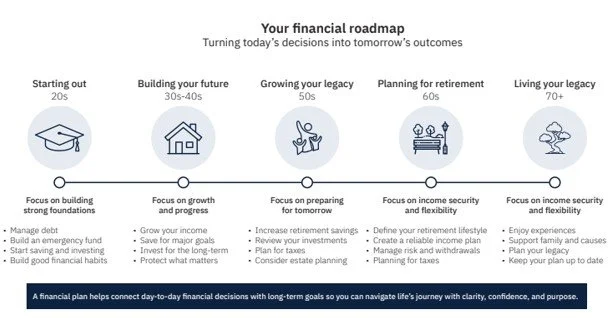
A financial plan is a personalized roadmap that outlines your current financial situation, your goals for the future, and the specific steps you need to take to reach those goals. It covers all areas of your finances, including an assessment of net worth (assets vs. liabilities), cash-flow management (income and spending), budgeting, savings, investments, taxes, insurance needs, retirement planning and estate planning.
That’s a lot to think about and can be intimidating. Fortunately, a financial planner can guide you through each step in the process. What follows is a summary of the key elements of an effective financial plan.
Discovery and goal setting
The first step in the planning process is to define your short-term and long-term financial goals. This step enables you to identify what is important to you and what you want to achieve. By clarifying your objectives, you can create a roadmap that lays out the necessary steps to reach those goals.
Budgeting and cash flow management
One benefit of a financial plan is that it allows you to gain control over your finances through effective budgeting and cash flow management. By tracking your income, expenses and savings, you can ensure your resources are allocated optimally. Armed with a clear understanding of cash flow, you can make informed decisions, avoid unnecessary debt, and develop healthy financial habits that assist you in reaching your goals.
Risk management and insurance planning
An essential part of a well-developed financial plan is assessing and managing risks. Life is full of uncertainties including job loss, illness or unexpected expenses. A properly developed financial plan incorporates appropriate insurance coverage to mitigate potential risks. Thoughtful risk management protects you and your family against unforeseen events, allowing you to protect your financial stability and maintain peace of mind.
Investment strategy
A structured financial plan incorporates an investment strategy tailored to your risk tolerance and financial goals and helps you determine how much to save, where to invest, and how to diversify your portfolio. By following a disciplined investment approach, you can optimize returns, build wealth, and take advantage of compound growth. A structured plan ensures that your investments align with your goals and risk tolerance, reducing the likelihood of impulsive or emotionally driven decisions.
Retirement planning
A critical part of an effective financial plan is retirement planning, the period of your life when you are no longer working and earning an income. With Canadians living longer than ever, the retirement planning part of the financial planning process is more important than ever. Retirement planning involves estimating future income needs, assessing retirement savings vehicles and determining the ideal retirement age. By starting early and regularly reviewing your retirement plan, you can make necessary adjustments and work towards a financially secure retirement.
Ongoing monitoring and adjustment
Life is full of unexpected twists and turns. A well-developed financial plan provides flexibility and adaptability to navigate these changes. It allows you to adjust your strategy when faced with major life events such as marriage, children, career changes or an economic downturn. Regularly reviewing and updating your plan ensures that it remains relevant and aligned with your evolving circumstances and goals.
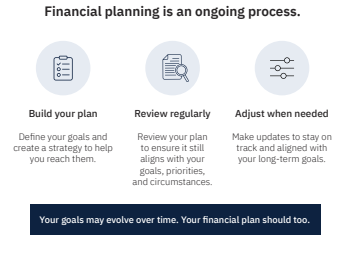
Working with a planner to develop a well thought out financial plan provides clarity and direction by helping you understand your current financial position as well as setting realistic goals and creating a roadmap to achieve them. Not having a financial plan risk not meeting your goals thus putting your financial future in jeopardy.
What this means for investors
A financial plan helps turn goals into actionable steps.
Planning can provide clarity and confidence during periods of uncertainty,
Financial plans should evolve as life circumstances change.
Working with a financial planner can help you stay disciplined and focused on long-term goals.
InvestEd
A financial plan is more than a document. It’s a framework for making better financial decisions over time. While markets and life circumstances will inevitably change, having a plan can help you stay focused on your goals and navigate uncertainty with greater confidence. Long-term financial success is rarely about making perfect decisions in the moment, it’s about having a thoughtful plan and staying committed to it over time.
References
1. https://kpmg.com/ca/en/media/2025/09/financial-plans-linked-to-retirement-confidence.html
